

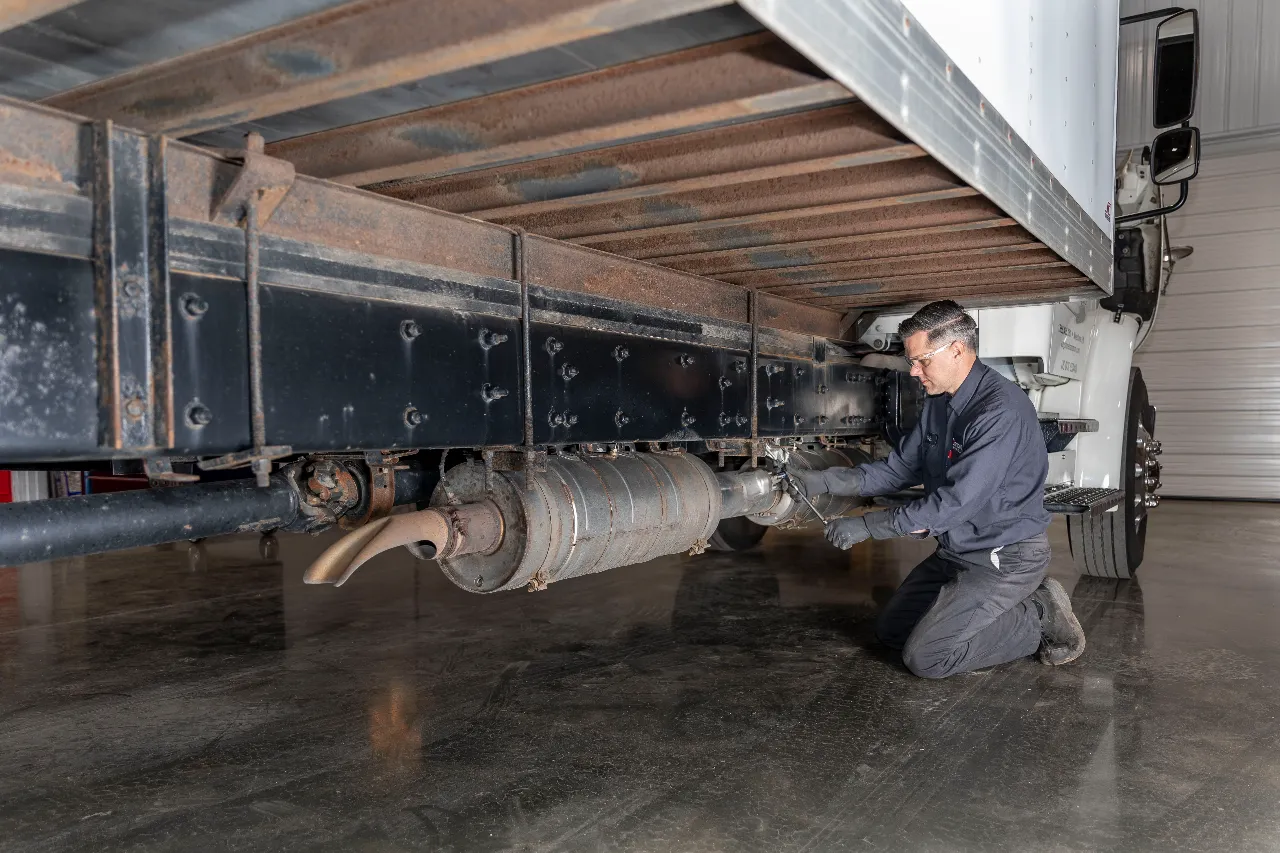
One of the most important components in your aftertreatment system is the Diesel Particulate Filter (DPF). Recognizing the warning signs of a failing or restricted DPF can help you address minor issues before they develop into expensive repairs or unexpected downtime.
1. The DPF Warning Light Is On
The most obvious indication of a DPF issue is the warning light on your dashboard. This light typically appears when the filter has accumulated enough soot to require regeneration or when the system detects a fault.
While it may be tempting to ignore the warning if your truck continues to operate normally, doing so allows soot accumulation to worsen. Eventually, excessive restriction can reduce engine performance and place additional strain on other emissions components.
A diagnostic inspection should be performed as soon as the warning light appears to determine whether the truck requires:
- Passive regeneration
- Active regeneration
- Forced regeneration
- Repairs to the aftertreatment system
2. Reduced Engine Performance
A clogged DPF restricts exhaust flow, making it more difficult for exhaust gases to exit the engine efficiently. As backpressure increases, engine performance begins to decline.
You may notice:
- Slower acceleration
- Reduced horsepower
- Poor throttle response
- Difficulty maintaining speed under heavy loads
These symptoms become increasingly noticeable when climbing grades or hauling heavy cargo. Restoring proper exhaust flow often restores the engine's normal performance.
3. Poor Fuel Economy
If your truck suddenly begins consuming more fuel than normal, the DPF may be contributing to the problem.
When exhaust restriction increases, the engine must work harder to produce the same level of power. Additionally, repeated regeneration cycles consume extra fuel as the engine raises exhaust temperatures to burn accumulated soot. Although many factors can affect fuel economy, an overworked DPF is a common cause that should not be overlooked.
4. Frequent or Failed Regeneration Cycles
Regeneration is a normal process that burns soot from the DPF by increasing exhaust temperatures. Under normal operating conditions, regeneration occurs automatically and completes without driver intervention. Problems arise when regeneration becomes unusually frequent or repeatedly fails to complete.
Several conditions can interfere with successful regeneration, including:
- Faulty DPF pressure sensors
- Exhaust temperature sensor failures
- Excessive soot accumulation
- Engine operating issues
- Short driving cycles that never allow sufficient exhaust temperatures
Repeated failed regenerations allow soot to continue building until the filter becomes severely restricted.
5. Excessive Exhaust Smoke
One purpose of the DPF is to trap particulate matter before it exits the exhaust system. If you begin noticing excessive black smoke from the exhaust, the aftertreatment system may no longer be operating correctly.
Although black smoke can also result from injector problems, turbocharger issues, or improper air-fuel ratios, it often indicates that the emissions system requires inspection. Prompt diagnosis helps identify the root cause before additional components become damaged.
6. Limp Mode or Engine Derating
Modern diesel engines continuously monitor emissions system performance through multiple sensors. If excessive restriction or a serious DPF fault is detected, the engine control module may reduce available power to protect the engine and emissions equipment.
This operating condition, commonly called limp mode or engine derate, limits acceleration and overall performance.
While frustrating, derating helps prevent costly damage that could occur if the vehicle continued operating with excessive exhaust restriction. Professional diagnostics are necessary to restore normal operation safely.
7. Strong Exhaust Odors or Unusual Heat
An overloaded DPF can cause exhaust temperatures to rise significantly. Drivers may notice stronger-than-normal exhaust odors, excessive heat near the exhaust system, or unusually high temperatures during regeneration events.
These symptoms may indicate that the DPF is struggling to complete regeneration or that additional aftertreatment components are not functioning properly. Because excessive heat can affect nearby components, this condition should be inspected promptly.
Common Causes of DPF Problems
Several operating conditions contribute to premature DPF restriction.
Frequent short trips often prevent the exhaust system from reaching temperatures necessary for complete regeneration. Engine problems that produce excessive soot can overload the filter more quickly than normal. Faulty sensors may also prevent the regeneration process from operating correctly, even when the filter itself remains serviceable.
Routine preventive maintenance and timely engine repairs play an important role in extending DPF service life.
Why Early Diagnosis Matters
Ignoring DPF problems rarely makes them disappear. Continued operation with a restricted filter can increase exhaust backpressure, reduce fuel efficiency, damage turbochargers, shorten engine life, and lead to expensive aftertreatment repairs.
Professional diagnostic equipment allows technicians to evaluate sensor data, measure DPF restriction, verify regeneration performance, and determine whether cleaning, regeneration, or replacement is the appropriate solution.
Keep Your Diesel Running Efficiently
Your Diesel Particulate Filter is a critical component that protects both your engine's performance and your vehicle's emissions system. Recognizing the early warning signs—including dashboard warning lights, reduced power, poor fuel economy, regeneration issues, limp mode, excessive smoke, and unusual exhaust heat—allows problems to be corrected before they become major repairs.
If your truck is showing any of these symptoms, contact RPD Services in Salem, Oregon. Our technicians can accurately diagnose DPF problems, perform the necessary repairs, and help keep your diesel truck operating efficiently and reliably.
.webp)


